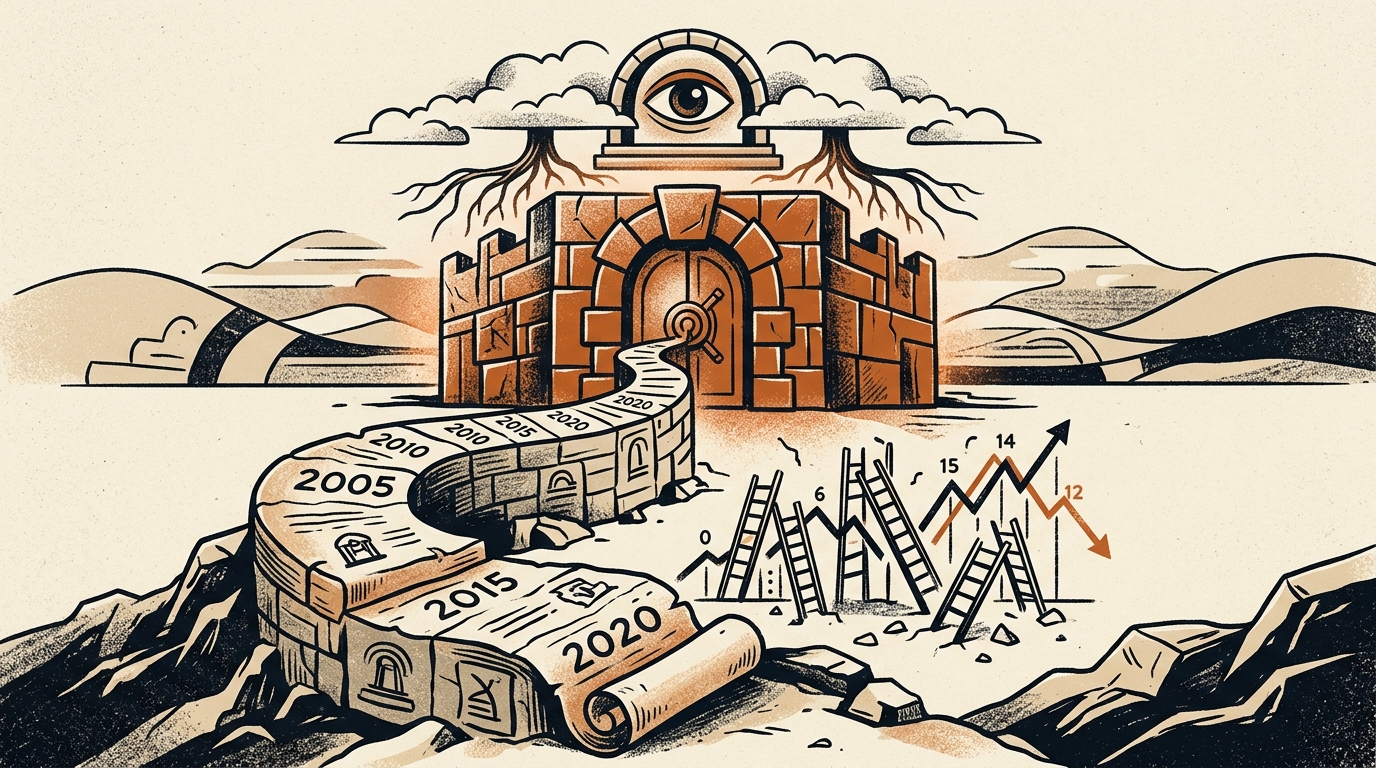
Wayback Longevity Predicts Domain Trust, Not Rankings
The Wayback Machine tells a trust story, not a ranking guarantee
When evaluating an aged domain or expired domain, most people instinctively check the Wayback Machine. More snapshots spanning a longer timeframe feels like stronger evidence of SEO authority. But here's the reality: longevity in the Wayback Machine predicts perceived domain history, not necessarily search ranking performance.
This distinction matters enormously when you're scoring domains for acquisition or development.
What Wayback longevity actually signals
A domain with 15 years of archived snapshots tells you something specific: the domain existed, was crawled by the Internet Archive, and someone was actively maintaining it long enough to accumulate that history. That's valuable signal, but it's primarily a trust proxy—evidence that the domain wasn't a spam vehicle or a flash-in-the-pan project.
Search engines, particularly Google, do factor in domain age as one input among dozens. But they're not reading the Wayback Machine. They're evaluating:
- Link history: Did the domain accumulate topical, authoritative backlinks over time?
- Content consistency: Did the site maintain thematic focus or pivot repeatedly?
- Crawl behavior: How frequently and recently did Google crawl it?
- User signals: Did real traffic patterns develop and sustain?
The Wayback Machine captures some of this—you can see content changes, growth patterns, and whether the site looked legitimate. But it doesn't capture the backlink graph, crawl patterns, or actual user engagement that drive rankings.
Why aged domains sometimes underperform their Wayback profiles
Consider this scenario: an expired domain sat inactive for 7 years. During that time, the Wayback Machine has 200+ snapshots spanning 12 years total. It looks pristine. The domain looks aged and established.
But here's what happened in those 7 dormant years:
- Backlinks rotted or were removed as the linking sites cleaned up dead references
- The domain's topical relevance decayed in Google's index
- Competing domains in the same niche accumulated newer, stronger signals
- Brand searches for the domain name probably stopped entirely
Wayback longevity can't tell you any of that. You could acquire this domain thinking you've inherited authority, then discover the actual link profile is thin or misaligned with your intended use.
What actually predicts SEO performance
A more actionable framework focuses on these signals:
Backlink profile quality and volume This is the single strongest predictor. An aged domain with 50 relevant, high-authority backlinks will outrank a 20-year-old domain with 5 spammy links. Wayback longevity doesn't measure this at all.
Topical coherence across time If the Wayback snapshots show a domain that consistently covered one topic (say, commercial real estate) versus a domain that jumped between unrelated niches every 2-3 years, the focused domain signals better expertise. This you can verify in Wayback, and it correlates with actual SEO results.
Recency of meaningful content updates A domain last meaningfully updated in 2019 has decayed relevance. One updated last month has current topical authority. Wayback can show you this, and it does matter—but only if combined with link analysis.
Current indexation status Does Google still have this domain in its index? An aged domain that's been completely deindexed is worthless regardless of Wayback history. Checking Google Search Console data (if available through domain transfer) or running site: queries reveals this quickly.
The longevity paradox
Here's where it gets counterintuitive: sometimes a domain with moderate Wayback longevity (5-8 years) outperforms one with 15+ years of snapshots.
Why? The newer-but-shorter-lived domain might have spent those 5 years building focused, relevant content and links, while the older domain drifted, pivoted repeatedly, or accumulated a scattered backlink profile.
Wayback longevity is a necessary condition for certain trust signals, but it's not sufficient. Length of history without quality history is noise.
How to actually evaluate an expired domain
If you're scoring expired domains for acquisition, use Wayback longevity as one checkpoint among several:
- Verify consistent topic focus across snapshots (use Wayback). Did the domain maintain coherent subject matter, or jump around?
- Analyze the backlink profile using third-party tools. Count, categorize, and assess the quality of inbound links. This matters more than Wayback snapshot count.
- Check indexation status. Is the domain still in Google's index? Run site: queries. This is non-negotiable.
- Assess content quality. Look at snapshots from the domain's apparent peak activity. Was the content substantive, or thin and template-driven?
- Consider the niche. An aged domain in a crowded space (e.g., finance, health) needs stronger signals to compete. In narrower niches, aged domains have more relative leverage.
- Evaluate ranking history if available. Tools like Ahrefs or SEMrush sometimes have partial historical ranking data. This is the closest thing to a direct prediction of performance.
The bottom line
Wayback longevity is real signal, but it's indirect. It tells you the domain has been around and was probably legitimate—not that it was ever particularly successful or that it will rank well under new ownership.
An expired domain with 20 years of Wayback snapshots and a scattered, low-quality backlink profile will underperform a 6-year-old domain with focused content and strong topical links every time.
Use Wayback longevity to filter out obviously suspicious domains. But use link analysis, content review, and indexation checks to predict actual SEO performance. That's where the real signal lives.